
ZEV Market Share: Improves to 20.4% in 2026:Q2
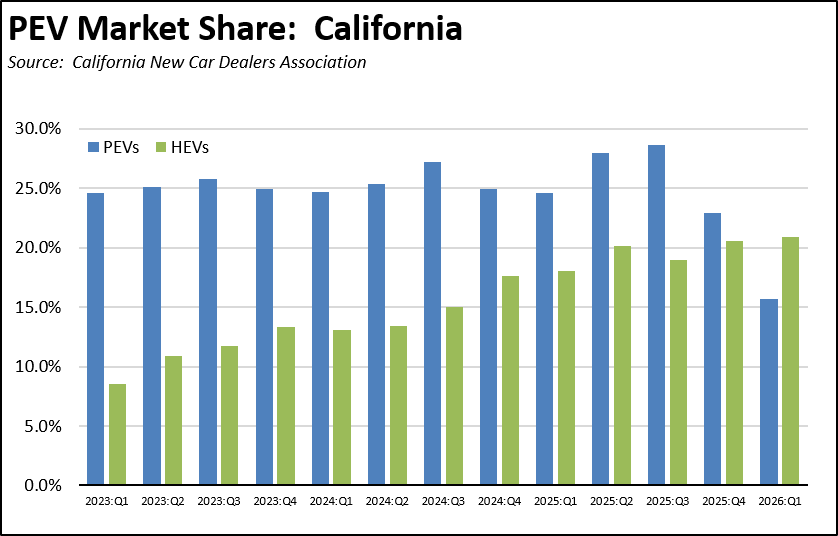
In the latest report from California New Car Dealers Association (CNCDA) and as defined by CARB, total ZEV registrations (PEV—plug-in electric vehicles that include both battery electric vehicles (BEV) and combustion engine plug-in hybrids (PHEV)) in the second quarter posted a 20.4% market share of total new light duty vehicle (LDV) registrations. This outcome was an improvement over the first quarter’s 15.7% but remained well below the previous high of 28.1% in 2025:Q3. That peak, however, was driven by delayed sales as customers had previously put off purchase decisions in the prior quarter in anticipation of further producer incentives as the federal tax credits neared expiration. A more appropriate comparison base is the 24.9% market share average in the first three quarters of 2025.
In sharp contrast, gasoline hybrids (HEVs) reached their highest market share at 23.2%, once again outselling PEVs altogether. Recent oil prices have caused Californians to pursue other power train options to reduce their monthly costs, but their preferences remain to seek flexibility around an established supply system rather than replacements. The sales data indicate that there is a defined market for electric vehicles, but it remains heavily oriented towards upper income households able to afford the high model prices while also being able to maintain second and third cars for more frequent usage and able to install in-home charging to reduce the inconvenience of owning an EV.
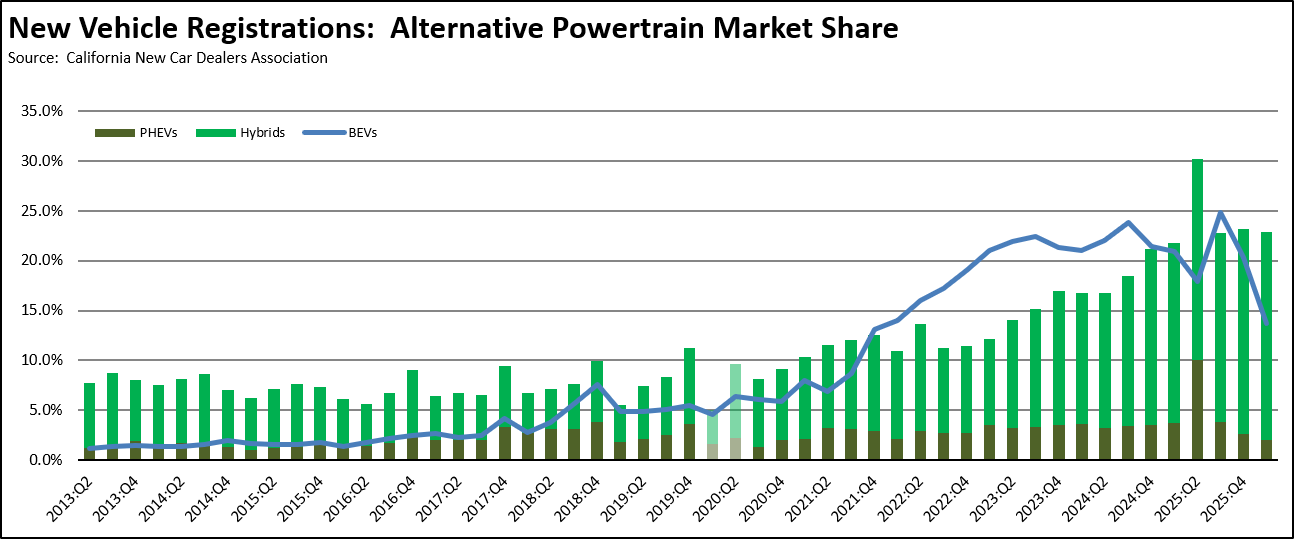
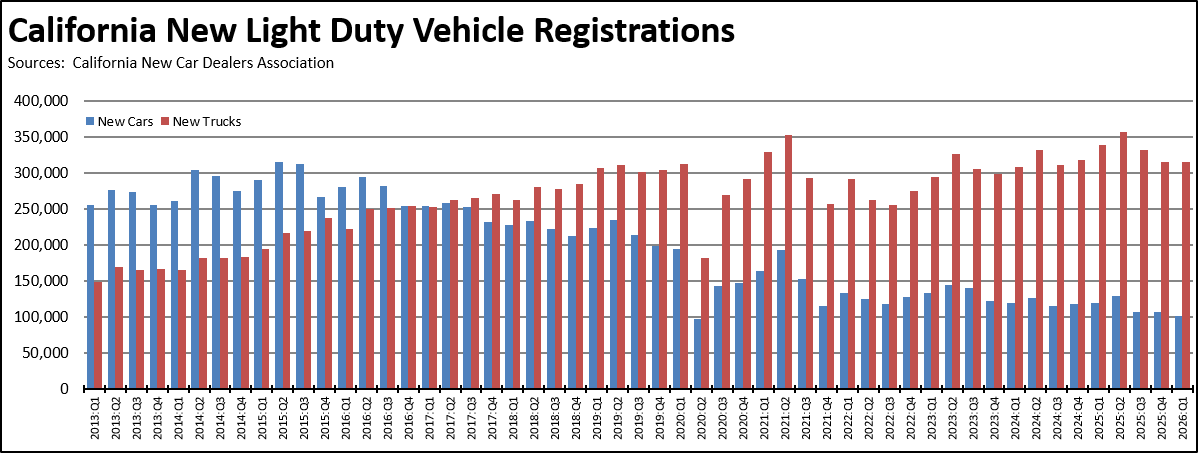
The PEV market share numbers, however, look better in light of continued low performance in total new LDV registrations. LDV registrations were down 7.7% in the first half of the year. CNCDA now expects total sales in 2026 to dip 3.9% from 2025—weaker than the 3.4% dip projected in the first quarter numbers—as the result of high interest rates, high new vehicle prices, and continuing uncertainty due to tariffs and fuel prices.
Electric Vehicle Prices Essentially Stable
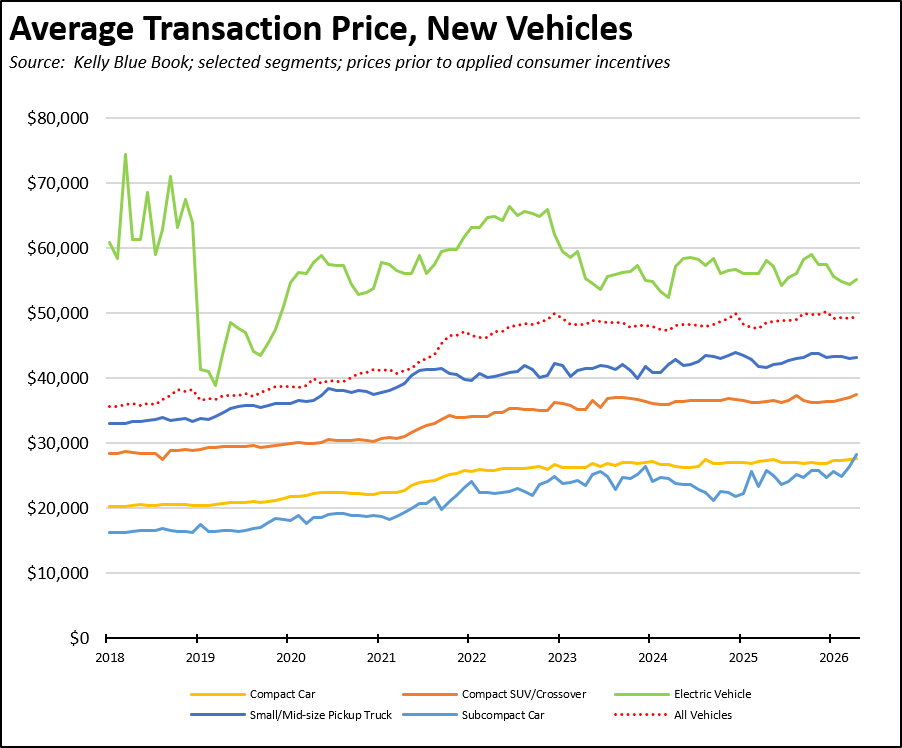
In the most recent results from Kelly Blue Book, the average electric vehicle transaction price was $56,238 in June, an uptick from May but only 2.2% lower than in November 2025 after expiration of the tax credits. At the same time, average transaction price for all new vehicles has remained high but relatively stable around an average of $49,600 since last fall. However, pricing strategy after expiration of the federal tax credits saw a shift in the customer’s favor, with the spread between electric and all vehicles falling from $8,400 in the 8 months prior to the credits’ end, to $6,200 in the 8 months after.
Incentive packages remain high and essentially have replaced the previous federal tax credits. Kelly Blue Book reports that incentives for electric vehicles in June averaged $7,300, down only slightly from $7,600 in May. This level of incentives again indicates that the primary effect of subsidies—such as the now-expired federal tax credits—is to keep prices high, transferring the value of such subsidies from consumers to producers. The cost of these current incentives in contrast remain with the producers.
California has once again decided to take some of this pricing pressure off of the producers. The recent budget bills include a new version of the state’s ZEV incentives, providing up to $3,500 for qualifying vehicles. This new effort seeks to make easier for ZEV customers—who remain predominantly older (72.3% over 55), non-Latino white (83.5%), upper income (68.8% with household income of $100,000 or more) males (79.8%)—wanting to buy $50,000 to over $80,000 (in the case of Rivian and Lucid) vehicles. And even though those budget bills still enact a structural deficit—with current budget year expenditures expected to exceed revenues by $18 billion—along with a growing new “Wall of Debt,” the bills still managed to include $135 million for this purpose.